This guide helps you safely increase your gas forge’s heat by adjusting the air/fuel mixture, checking pressure and fuel supply, improving insulation, and inspecting the burner.
Adjust The Air/Fuel Mixture For Maximum Heat
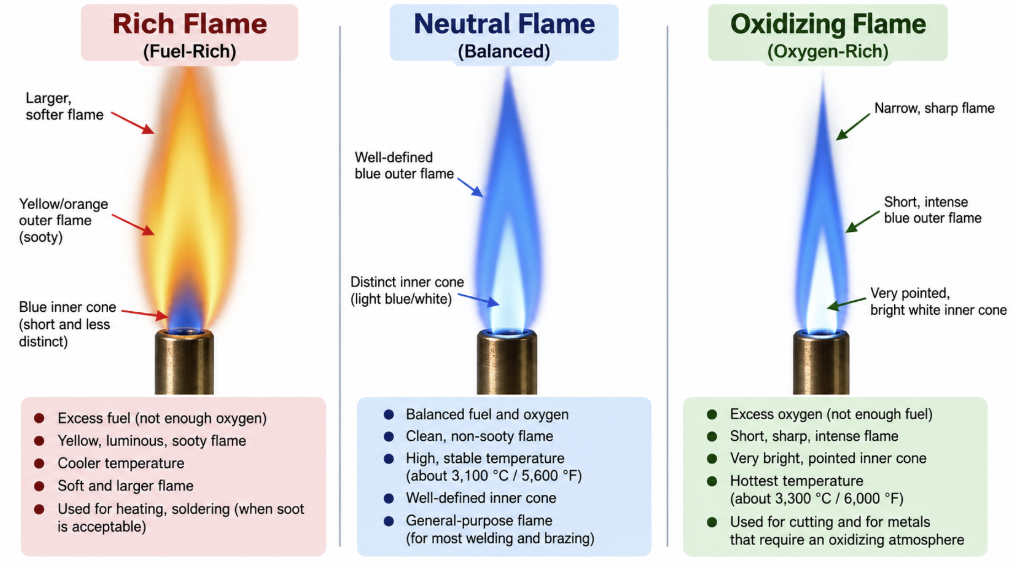
The most important step is tuning the air choke on your propane burner. A rich (fuel-heavy) flame may appear larger but can waste fuel without adding useful heat. Open the choke slightly until you see a steady, blue-tipped flame with minimal soot or “dragon’s breath” escaping.
- A stable neutral flame should be bright and energetic rather than lazy.
- A reducing flame (slightly rich) may help forge welding but is not necessarily hotter.
- An oxidizing flame (excess air) can increase scaling and may not provide more heat.
Do not assume that a larger or brighter flame means higher temperature. A well-tuned burner provides the most efficient combustion for your steelwork, whether forging or joining.
Check Pressure And Fuel Supply
Propane regulator pressure affects how much gas reaches the burner but is not itself a temperature setting. Start with the manufacturer’s recommended PSI range (typically 5–10 psi) and adjust only after tuning the air choke.
If your forge struggles to reach high temperatures, check these components:
- Tank frosting means propane is vaporizing too quickly.
- Regulator flow should not be restricted by kinks in the hose.
- Orifice blockage may reduce gas delivery.
- Damaged burner tube can disrupt airflow.
A weak flame at high pressure indicates a fuel-supply problem. Use a properly sized propane tank and follow manufacturer guidelines for regulator installation, leak testing, and maintenance.
Improve Heat Retention
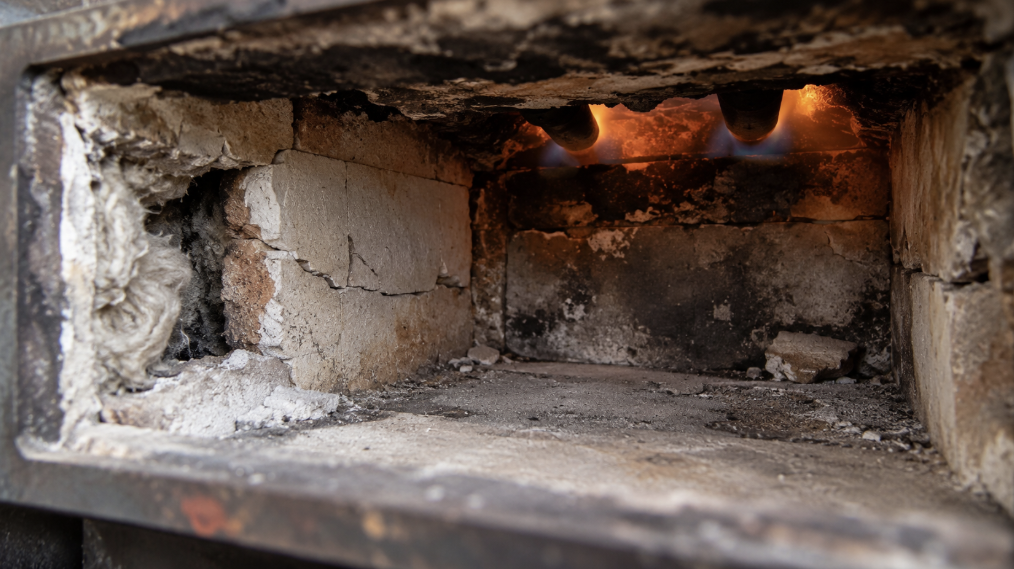
Ceramic-fiber blanket insulation is designed to withstand high temperatures but may degrade over time. Repair gaps or thin spots in the lining with refractory cement or new fiber. Reduce unnecessary openings at the front and rear of the forge using firebrick or other suitable material. Just make sure to leave enough space for safe access and combustion air.
A larger chamber needs more burner capacity than a smaller one. If your forge struggles to reach welding heat, consider whether it is properly sized for its burner.
Inspect The Burner
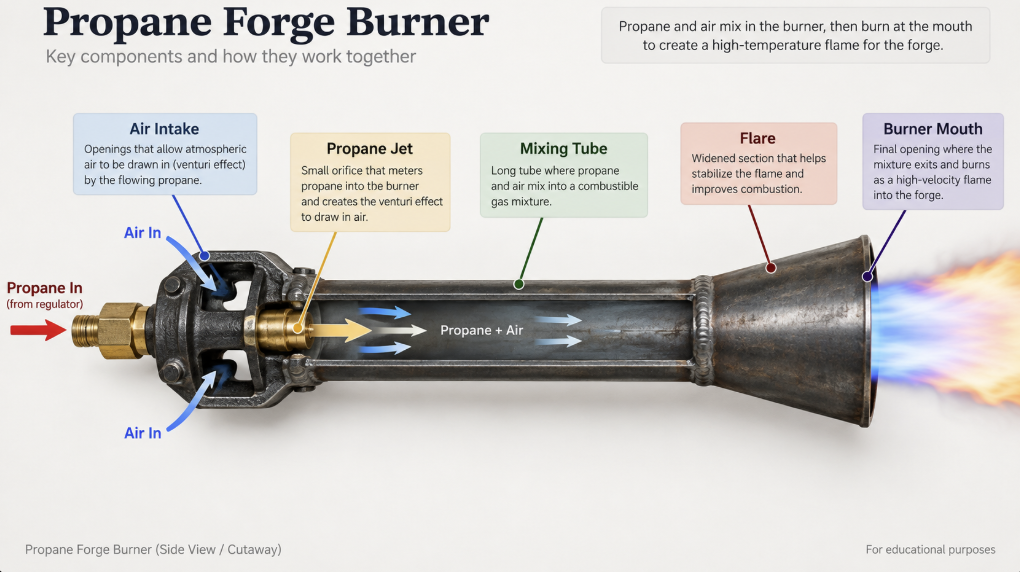
If your gas forge does not burn hotter even after adjusting pressure or insulation, check the burner itself:
- Jet alignment: The propane orifice should point directly into the mixing tube.
- Air intake: Ensure air openings are unobstructed and that the choke adjusts freely.
- Burner stability: A flame that lifts off or burns inside the tube indicates a problem.
Stop operation immediately if you see flames traveling backward into the burner. Correct the issue before continuing.
Safety Considerations
Propane combustion produces carbon monoxide (CO), which is odorless, colorless, and deadly. Follow these precautions:
- Operate your forge outdoors or in a well-ventilated area.
- Install CO detectors near fuel-burning equipment.
- Test fittings regularly for leaks using approved methods.
- Keep a fire extinguisher rated for flammable liquid fires nearby.
Stop operating the forge if you see flames burning inside the burner tube. Correct the issue before restarting.
Common Forge Issues And Solutions
| Symptom | Likely Causes | Recommended Checks |
|---|---|---|
| Large yellow or orange flame | Mixture too rich, insufficient air, blocked air intake | Open choke gradually; inspect air openings and burner alignment |
| Harsh pale-blue flame or flame lifting off burner | Mixture too lean, excessive air or pressure | Close choke slightly; reduce pressure; check burner stability |
| Forge gets hotter when openings are partly closed | Excessive heat loss or oversized openings | Use properly positioned refractory blocks; do not obstruct required combustion air |
| Flame is weak at high pressure | Empty/cold tank, restricted regulator, blocked orifice, undersized supply | Inspect tank, hose, regulator, and orifice |
| Burner pops or lights inside the tube | Incorrect mixture, poor velocity, damaged burner, improper flare | Stop operation and correct the burner before continuing |
| Forge heats slowly but eventually reaches temperature | Inadequate insulation, large chamber, low burner output | Improve lining, reduce chamber volume, or use a correctly sized burner |
| Metal scales heavily | Oxidizing flame, excessive air, long exposure | Use a neutral or slightly reducing atmosphere where appropriate |
| Forge cannot reach welding heat | Insufficient burner capacity, poor insulation, excessive openings, weak fuel supply | Check the whole system instead of simply increasing pressure |